Monday, November 17, 2014

Pro, by Katha Pollitt

About 2 chapters into Pro, I thought to myself how much I would like to send the book to each and every member of the Louisiana state legislature and force them to read it, a la A Clockwork Orange. Everything she wrote just made so much sense, about power, women, healthcare, quality of life, and so on. She tied together in one bundle all of the various surveys, research, ideas, and commentary that have been put forth regarding reproductive justice issues. Everything she said made sense! Then I realized that my idea would never work because the other side does not traffic in facts or reason but rather emotion, propaganda, and subterfuge. You can’t reason with unreasonable people.

I came to the understanding that Pro isn’t really targeted at the pro-forced-birth contingent, but rather the opposite side of the aisle. Pollitt presents a case for, pardon my use of jargon, reframing issues of abortion and reproductive justice and not running away from the pro-abortion label. Honesty is called for rather than attempts at managing public relations. Time to shout out that abortion is about healthcare, economics, and, above all, the right to self-determination. Slut shaming and outright lies need to be called out whenever they occur and by whomever. The last two paragraphs sum up her thesis (which is sort of the point of a concluding statement, isn’t it?):
“For those who are troubled by America’s high abortion rate, the good news is that we already know what will lower it: more feminism. More justice. More equality. More freedom. More respect. Women should have what they need both to avoid unwanted pregnancy and childbirth and to have wanted children. For motherhood to truly be part of human flourishing, it has to be voluntary, and raising children—by both parents—has to be supported by society as necessary human work. Motherhood should add to a woman’s ability to lead a full life, not leave her on the sidelines, wondering how she got there.

For this to happen, the old paradigms have to go: pregnancy as the punishment for sex, and women as endurers of fate or God’s will, biologically destined to a lesser life and needing a man to survive. But even in feminist heaven, there will be abortion, as there is in even the most prosperous, enlightened countries in the world. Because life will always be complicated, there is no perfect contraception, and there are no perfect people either. We need to be able to say that is all right.”
My one beef with the book: its lack of an index. Non-indexed nonfiction works make my head hurt.

Thursday, October 23, 2014

The Bodies We Wear, by Jeyn Roberts

The Bodies We WearThe Bodies We Wear by Jeyn Roberts

My rating: 4 of 5 stars


The Bodies We Wear is a dark reflection on the factors that shape us into the people we are, the capacity for hope and change, the horrors and collateral damage of addiction, inequality in society, and what justice looks like in an unjust world. All of this comes through a few weeks in the life of an exceptional and exceptionally damaged teenage girl in an alternative universe where a drug known as Heem shows users catch a brief glimpse of heaven or hell after their bodies “die” temporarily. Heem users—apparent to everyone because of physiological changes and scarring—are ostracized by society; no “respectable” person will be associated with them. Forced to use Heem as a child as a warning to her mother by dealers who had murdered her father (her mother abandoned her shortly thereafter), Faye is at the precipice of change when we meet her. Just as she deems herself ready physically as a warrior to extract her revenge, others enter her life and make her rethink the path that has been her sole focus for years. How Faye approaches the change in her life provides the backbone of the story. In a bleak, science-fiction setting (the story begins at night in the rain so the whole book has the feeling of black about it), Faye nonetheless must face the same issues as teenagers everywhere: bullying, overbearing parental figures, bad teachers, and the messed-up, confusing world of romance. Roberts mixes the familiar with the fictional and demonstrates that, while not all endings are happy ones per se, often a glimmer of hope exists that can transform our own worlds.

In interest of disclosure, I received a free prepublication e-copy from the publisher for reviewing purposes.


View all my reviews

Wednesday, October 15, 2014

The Last Beach

The Last BeachThe Last Beach by Orrin H. Pilkey

My rating: 4 of 5 stars


Exactly 20 years ago this fall, I was introduced to the work of Orrin Pilkey when, as a college senior raised in a land-locked state, I chose coastal erosion as the topic of my honors thesis. In those days of Silver Platter and Gopher, Pilkey had a talent for translating complicated scientific concepts into language a journalism major who'd taken all of 2 undergraduate science classes could understand. And the picture wasn't pretty, even then, particularly on the East Coast of the United States, where the barrier islands that had protected the shore for centuries had been filled with condos and amusement parks and where the measures to protect property had just accelerated the damage or moved it to a different community.

In The Last Beach, Pilkey (and co-author Andrew Cooper) brought me up to date on what's been happening since. And, as the word "last" might indicate, the picture isn't pretty. Not only do they talk about the corruption of natural processes, but they also address solely manmade phenomena, such as digging up beaches so the sand can be sold to make concrete. You can hear the authors' frustration and desperation as they recount one horror after another. The Last Beach almost reads like a message in a bottle, one last act of hope that someone might hear their cries. Don't expect any easy answers, as none exist. Also, consider moving inland.


View all my reviews

Trash-reading September

Well, not entirely trashy. I've read but haven't reviewed a couple books in Kevin Hearne's Iron Druid series. By book 5 or 6, there's really not enough distinguishing them to take the time. September was a kind of bleh month, and I did more knitting than reading. I've started multiple books but not finished them. So, I've been rather unproductive here. I'm hoping to get caught up on all my reviews and start reading something I might actually finish.

Goebbels: A Biography

Goebbels: A BiographyGoebbels: A Biography by Peter Longerich

My rating: 4 of 5 stars


This book requires a certain type of reader -- one with a deep interest in the topic at hand who can cut through thick prose like a hot knife through butter. If I had more time and more head space at the moment, I might be that person. Alas, I only made it about 150 pages into the book before my Netgalley-provided version expired. (That put me, chronologically speaking, in the very early days of the Nazi party when Goebbels was still a fairly low-ranking regional official.) This latest book on Goebbels is an English translation of a German history based on the not-so-good doctor's voluminous diaries. In and of themselves, they show the man's skill with propaganda, his first subject being himself. He was trying to create his own legend while living it, a complicated effort. Luckily for the reader, Longerich is here as narrator, helping us to distinguish fact from fiction. I recommend the book wholeheartedly for anyone with a strong interest in the personalities of the Reich and a love of meaty prose.


View all my reviews

Thursday, August 14, 2014

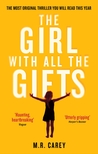
The Girl With All the Gifts, by M.R. Carey

The Girl with All the GiftsThe Girl with All the Gifts by M.R. Carey

My rating: 5 of 5 stars


Since Mary Wollstonecraft examined medical ethics and the God complex in her tale of the Modern Prometheus, science fiction and horror have worked toward a calling higher than simply scaring the pants off readers. M.R. (a.k.a., Mike) Carey’s new book about a post-epidemic Britain (for spoilers’ sake, I’m leaving out details) accomplishes this task admirably, looking looking at topics such as research ethics, how our experiences impact our behavior, and, at the heart of the story, what makes us human. By telling the story from the viewpoints of multiple characters, we see each person’s perspective on the same events. Most of the time, one cannot classify any one individual as wholly good, wholly evil, wholly dumb, etc. Everyone has their initial impressions turned on their heads in some way, whether we’re talking about a scientist who learns her research is headed in the wrong direction or a teacher who realizes there’s more to the authority figure she despises. This novel is a thinking person’s horror, and the last 15 pages or so themselves are worth the price of admission. The Girl shook me in new and not-altogether-good ways (when I finished I had to look at puppy pictures for 10 minutes), but I loved it anyway.


View all my reviews

Tuesday, August 5, 2014

Sisters, by Raina Telgemeier

SistersSisters by Raina Telgemeier

My rating: 4 of 5 stars


Older sisters everywhere will nod their head in understanding and solidarity as they read Telgemeier's autobiograpical graphic account of her childhood relationship with her younger sister, a sort of follow-up to Smile. The story moves between a family road trip from San Francisco to Colorado in Raina's early teen years and various points in the sisters' history prior to that journey. Like many such relationships, the Telgemeiers' involves conflict, disappointment, frustration, but also occasional flashes of tenderness and understanding. At the same time we see the larger issues facing them: their parents' troubled relationship, the addition of a younger brother, the younger girl's prickly personality. Sisters makes me want to sit and sip cocktails with Telgemeier while we trade stories about our horrible and wonderful younger siblings.

Disclosure: I received an electronic ARC of the book from the publisher for review purposes.


View all my reviews

Thursday, July 24, 2014

Above the Dreamless Dead

Above the Dreamless Dead: World War I in Poetry and ComicsAbove the Dreamless Dead: World War I in Poetry and Comics by Chris Duffy

My rating: 5 of 5 stars


I admit that I don't read a lot of poetry: I usually have to read it aloud or in my head, so it's slow going. Also, I have a fear of not getting The Point based on years of missing the fact that the tree in Stanza 11 represented the writer's angst about his lover's shoes during literature courses. Thus, I was a little reticent going into Above the Dreamless Dead (FYI, I received an e-galley from the publisher for free). But the combination of the graphics and the poetry, instead of adding a layer of obfuscation and interpretation, helped clarify the authors' intent and bring it to lifhee for me.

The verse here comes from the "trench poets" of World War I, with a few popular songs of the era thrown in. Appearing in time for the 100th anniversary of the formal start of the war, the book depicts the horror of what many consider the first modern war: the squalor in the trenches, the horror of gas attacks, the gallows humor of the troops, and the lasting aftermath for those who survived. The black-and-white artwork complements the poetry well rather than drawing too much attention; it's simultaneously beautiful and horrible. Artists' notes at the end of the book provide insight into why certain design elements were incorporated or why a particular style was chosen. (I missed these until after I'd gone through the poems, so I'll have to re-read the book; I'll probably get the print version so I can move back and forth between the notes and the poems more easily.)

AtDD is a great example of how graphic art and words can be paired to create a work that is greater than the sum of its parts.


View all my reviews

Friday, July 18, 2014

Ark Storm, by Linda Davies

Ark StormArk Storm by Linda Davies

My rating: 4 of 5 stars


Ark Storm isn't your average disaster book, where the focus is on the event and the horror it unleashes. The titular storm only occurs in, maybe, the last fifth of the book. Instead, the book is more of a thriller focused on the events leading up to the storm. These involve a confluence of activities and events that include suspicious car crashes, dead prostitutes, traumatized scientists, financial shenanigans, mysterious ex-military types, venture capitalists with a god complex, international terrorists hiding behind the mantel of wealth, and El Nino. Threading between all of these other factors is a scientific scenario that is, indeed, based in fact. Put it all together and you've got a whirlwind of a story that flows like an atmospheric river. (Yeah, I had to throw in some meteorological puns.)

And that flow is what may be one of Ark Storm's main flaws: Everything is too easy, and the conflicts seem to be resolved too quickly. The coincidences are too convenient (eg, a financial law enforcement task force happens to be investigating the same sleazeball getting tips from an aunt in California who knows more than she's supposed to). Not to mention that one of the most fantastical (as in not real, as opposed to gnomes and knights) elements of the novel is the ease with which various federal law enforcement agencies cooperate and partner to bring down the bad guys. There are no interagency pissing contests and no upper-level dick swinging. A once-in-a-millennium storm may be a longshot, but feds playing well together? Now that's some science fiction.

Still, Ark Storm is a fun read, and you'll learn something along the way.

Disclosure: I received an electronic version of the book via NetGalley.


View all my reviews

Wednesday, July 16, 2014

Book review: Hounded

Hounded (The Iron Druid Chronicles, #1)Hounded by Kevin Hearne

My rating: 4 of 5 stars


Hounded was a nice travel read, combining action, some mystery, humor, and even a little sentiment. The story of the last living Druid, the novel places various mythologies, focusing on the Celtic of course, in the present day. Remarkably, the author incorporates them so easily that it almost doesn't read like fantasy. The plot includes twists and turns to keep you guessing, and certain characters were written ambiguously enough that I couldn't predict what their next move would be in the conflict that makes up the plot. Additionally, how can you not love a book with a sausage-obsessed Irish wolfhound and well-written text that includes phrases like "hellish Creamsicle." I'm looking forward to seeing what happens next to our handsome baseball-loving elder Druid.


View all my reviews

Tuesday, June 24, 2014

The prodigal returns

After a 6-month hiatus, I've decided to play around with the blog again.

The interim has been fairly active. I've started writing for an education blog (right now, just a weekly news roundup). I taught my first semester-long class, which has been a lot of stress and quite the learning experience. I got settled in to the new job. I've gone back and forth a thousand times over whether I want to stay in Louisiana. I ranted about the political situation and became engaged in local activist projects. I did lots of volunteer work. I have been working on my Deutsch more regularly. I attended to my personal life. Generally, life is picking up. I leave tomorrow for a visit to a good friend, the first trip I've had in 5 years that did not involve a funeral or family obligations.

Well world, here I am.

Tuesday, December 31, 2013

A Small Town Near Auschwitz, by Mary Fulbrook

A Small Town Near Auschwitz: Ordinary Nazis and the HolocaustA Small Town Near Auschwitz: Ordinary Nazis and the Holocaust by Mary Fulbrook

My rating: 3 of 5 stars


I liked this book but just didn't love it. The author provides a great deal of good historical information about the role of local government officials in clearing a town -- just miles from the gates of Auschwitz -- of its Jewish population. Of course, the process didn't begin with the cattle cars, but with restrictions on movement and employment, the requisition of Jewish-owned homes for ethnic German families, and ghettoization. And I think here lies one of the book's central strengths: portraying how a gradual process based on antisemitism allowed minor functionaries to serve as the cogs in the wheels of the Final Solution while being barely aware of what the Reich's endgame would be. Not only were Hitler and company thus able to use, as the author calls them, "ordinary Nazis" who might have been a little more squeamish about genocide, but later on, the frog-boiling nature of the events made it easier for these ordinary Nazis to lie to investigators, to their families, and to themselves about the roles they played and what they knew about the Holocaust at what point in the timeline of events.


View all my reviews

Finally, a breath

In the past month and a half, I have put my casa on the market, moved into a second-floor apartment, and sold said casa. I have done almost no reading, because most of my books are still in boxes, and I didn't want to risk losing a library book in the confusion (still looking for our potholders). But on the happy side, I have cash to spare again, which resolves all sorts of other tensions, so the world is looking up for the first time in ages.

Dark Matter, by Michelle Paver

Dark Matter: A Ghost StoryDark Matter: A Ghost Story by Michelle Paver

My rating: 4 of 5 stars


One of my favorite settings for horror is the Arctic (or Antarctica, I suppose) when the sun sets for months. When the light of day usually brings some measure of safety, what do you do when day won't come for a very long time? Paver uses it well for this book about several young men performing scientific research and seeking adventure in the islands at the top of the world just before the outbreak of the Second World War. Among the book's strengths is the ambiguity of the happenings: The actors are well aware of how the Arctic can affect men's minds, so until almost the very end they're not sure how to react to their experiences. Is it all in their heads, or did they see what they think they saw? A good read for a cold winter night.


View all my reviews

Friday, November 29, 2013

Rage Within, by Jeyn Roberts

Rage Within (Dark Inside, #2)Rage Within by Jeyn Roberts

My rating: 3 of 5 stars


I was pretty meh about this book. On the plus side, we get a bit of an interesting backstory behind the events that transpired. On the negatives, parts of the plot were predictable (did anyone out there NOT know who the traitor would be?) and unbelievable (brain-splitting headaches and sexytimes usually do not co-occur). But the story was interesting enough to keep me reading to the end and wondering where the author will go in the next book (the final in a trilogy, I believe).


View all my reviews

The Last Watch, by Sergei Lukyanenko

The Last Watch (Watch, #4)The Last Watch by Sergei Lukyanenko

My rating: 4 of 5 stars


Usually when a series book takes a trip from its usual setting, it's a sign that the author is running out of ideas to keep the storyline fresh. In Lukyanenko's The Last Watch, taking a familiar character and putting him/her into an unfamiliar setting works well, almost a natural progression from Twilight Watch's side trip to Prague. As the protagonist Anton (and the reader) is educated more deeply about the essence of who the Others are and travels further into the Twilight world, the story expands externally from Moscow and heads farther afield into Edinburgh and the Stans. And although the external plot deals with a series of murders in Edinburgh, the book simultaneously delves into Anton's internal struggle over killing a vampire he once considered a friend and his role in the overarching struggles and balance of power between the Watches. To paraphrase Anton near the end of the book, he feels like a small screw in a huge, merciless machine. No doubt this struggle will come to a head in the fifth and final book in the series.

Despite some story holes (who couldn't guess the killer's true identify after the name was provided), Last Watch is a worthy successor that crosses genre (fantasy/scifi/mystery) boundaries.


View all my reviews

Thursday, November 7, 2013

Hidden

Hidden: A Child's Story of the HolocaustHidden: A Child's Story of the Holocaust by Loïc Dauvillier

My rating: 5 of 5 stars


Who knew that an adorable book about the Holocaust was possible?

In this sweet-yet-heartbreaking graphic novel, we travel back in time as grandmother Dounia tells little Elsa about her life after the German occupation of France began during World War II. Dounia’s happy life of school, friends, and a crush on a boy changed overnight. The basic elements of the story are familiar. First, come the stars sewn onto clothing and the friends and teachers who suddenly shun Dounia. Her parents try to soften the blow by explaining that they have become a family of sheriffs, hence the yellow stars they must wear. Then, the pounding on the doors in the middle of the night. From there, the story portrays the brighter side of humanity. Hidden by her parents in the false bottom of an armoire before the soldiers burst in, Dounia is rescued and spends the next years being sheltered until the end of the war. I’ll leave the rest of the story for readers to discover.

This child’s-eye view of the French occupation is a perspective I’ve rarely seen. Here the approach works, mixing the horrifying with the bittersweet through the filters of childhood. The artwork--full of somber blues and browns--depicts Charlie Brown-like characters with heads disproportionate to the bodies, again reminding the reader that this story, despite the deadly serious themes, belongs to a child. I would totally give this book to one of my elementary school niecelets following a discussion of what transpired during WWII.


View all my reviews

Sunday, November 3, 2013

The Sound and the Furry, by Spencer Quinn

The Sound and the Furry (A Chet and Bernie Mystery #6)The Sound and the Furry by Spencer Quinn

My rating: 4 of 5 stars


For the 6th book in his Chet & Bernie series, Quinn takes his protagonists on a road trip to Louisiana to look into a missing persons case. The change of scenery adds a bit of freshness to the story that has been missing in the past couple of books. We get to see Chet and Bernie out of their familiar environment, dealing with the unique culture that is south Louisiana. And Quinn did get that culture right -- the mixture of friendliness and wariness about outsiders, the shady deals, the shadier police force, the centuries-old family feuds, and the oil industry that covers it all; literally, when it comes to the land and wildlife.

One aspect of the book that was a bit jarring to me: Chet's inner dialog. Perhaps it's because I more or less only skimmed books 4 and 5, but this go-round, Chet seemed to be "talking" much more. Reading through the text was much like a conversation with a bipolar friend during a mania phase, just one thing after another punctuated occasionally by a Squirrel! Not that he's a bad narrator -- Chet is one observative dog, even if he can't always remember what the observations mean. I wish I knew how to what extent Quinn has incorporated real research about dog cognition into how he develops Chet's dialog, to know how accurate it might be.

Anyway, in summary, The Sound and the Furry is a nice read, with comparatively little dog abuse this time (a bonk or two on the head and some prolonged dog-paddling), some new characters, and a fairly pleasant resolution. What more could you ask for in a canine cozy?


View all my reviews

Wednesday, October 23, 2013

Twilight Watch, by Sergei Lukyanenko

Twilight Watch (Watch, #3)Twilight Watch by Sergei Lukyanenko

My rating: 4 of 5 stars


Not many series get better as you get farther along, but the tales of the Others may just be one of them. Perhaps what I'm sensing is Lukyanenko's move from straight action to a more winding philosophical treatise on what makes the Others tick, the differences between the two "sides," and the individual characters on which he focuses. Again, the focus of this novel (or set of three stories) is Anton, although many characters from the earlier books make appearances: Sveta (now his wife and the mother of his little Other), Gesar, Zabulon, Edgar, Kostya, and Semyon. These stories center around issues of metaphysics--the relationship between magic and energy in the Others and in humans--and how these issues could be used within the world for good or ill (or a combination thereof). Twilight Watch is a great example of how good fantasy/science fiction can make you stretch your brain a bit.


View all my reviews

Wednesday, October 16, 2013

The Wicked, by Douglas Nicholas

The Wicked (Something Red, #2)The Wicked by Douglas Nicholas

My rating: 4 of 5 stars


IMHO, The Wicked is generally a worthy successor to Something Red. Featuring the same traveling musicians/family by choice as in the earlier novel, the book bit-by-bit reveals more about the characters, the world in which they live, and the overall plot. Although some parts of it may be a bit predictable to those who have been around the horror block a few times (eg, the nature of the beast in this one), The Wicked is still a great read, full of adventure, magic, humanity, and love.

A couple small quibbles though: The term "russet fur" sounds like it came straight from a Barbara Cartland novel with an Irish lassie on the cover. Actually, the phrase probably has been used in every cheesy romance featuring a redhead at least once. I hope the author avoids these sorts of scenes from here on out.

Disclaimer: I received an electronic manuscript from NetGalley.


View all my reviews